

Qovery
Connect Qovery as an access review source using an organization API token with the Admin role so Probo can list your organization's members.
Probo reads your Qovery organization’s members through the Qovery API so you can review who has access.
Prerequisites
Section titled “Prerequisites”- Probo organization administrator access
- The Owner, Admin or DevOps role in Qovery. Those three built-in roles cover organization setup, which includes API tokens. A custom role cannot generate one
- The Organization ID, which the Connect dialog asks for alongside the token. It is a UUID, and Qovery uses it as the
{organizationId}path segment of its API. With the organization open in the Console, the ID is the segment that follows/organization/in the address bar
Collected Fields
Section titled “Collected Fields”| Probo field | Qovery field | Notes |
|---|---|---|
| Name | name | Falls back to nickname, then to the email address |
email | ||
| Role | role | OWNER, ADMIN, DEVELOPER and VIEWER are shown as Owner, Admin, Developer and Viewer, matched without regard to case. Any other value is shown as Qovery returns it, and a member with no role is listed without one |
| Admin | role | Flagged as an administrator when role is OWNER or ADMIN, matched without regard to case |
| Status | Not supported | |
| MFA | Not supported | |
| Last login | last_activity_at | Qovery documents it as the last time the user was connected. Left empty when the field is absent or is not an RFC 3339 timestamp |
| External ID | id | Stable identifier used to track the account across reviews |
| Created at | created_at | When the member joined the organization |
Probo skips any member Qovery returns without an email address.
Step 1: Create an API Token
Section titled “Step 1: Create an API Token”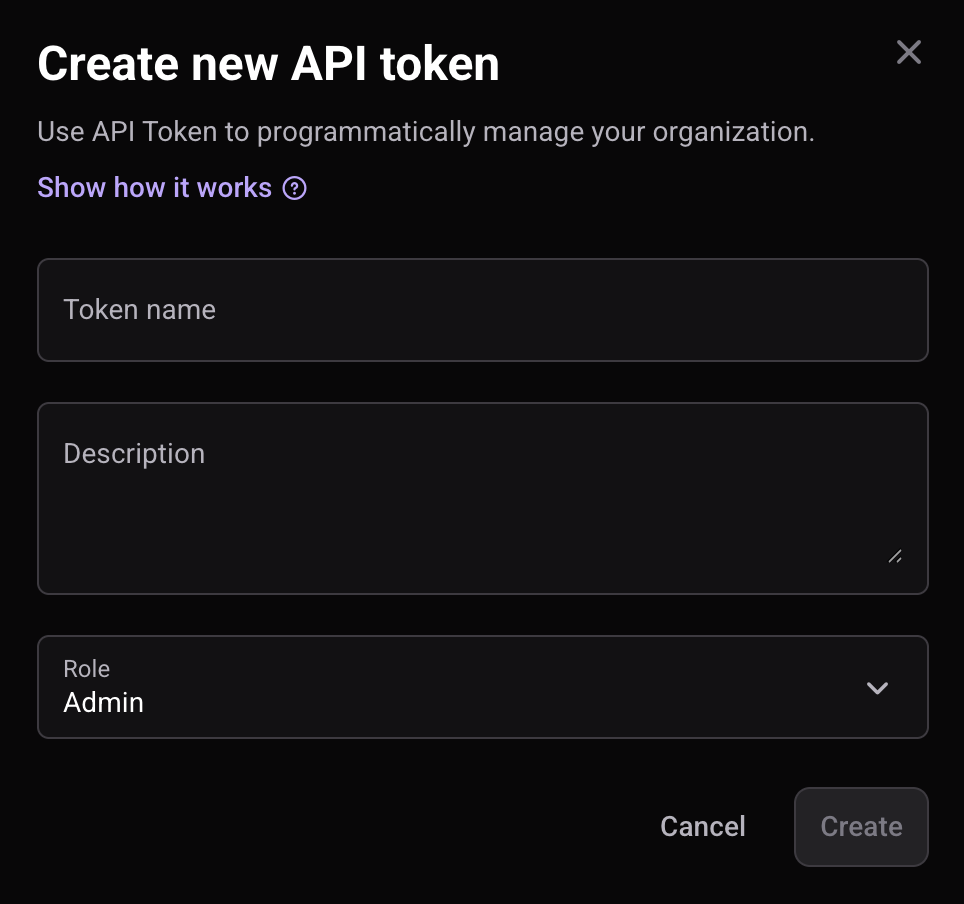
- In the Qovery Console, signed in as an Owner, Admin or DevOps user, open the organization you want to review, click the Settings tab, then open the API token section.
- Click Add new, enter a Token name (e.g.
Probo Access Review) and a Description, then pick Admin in the Role list. - Click Create, then copy the token. Qovery shows it once and you cannot retrieve it later, so store it securely.
Step 2: Connect in Probo
Section titled “Step 2: Connect in Probo”- In Probo, go to Access Review > Connections.
- Find Qovery, click API Key, paste the token, enter your Organization ID, and click Connect.
Probo names the source after your organization and pulls its members into your campaigns.
Troubleshooting
Section titled “Troubleshooting”- Token rejected. Qovery answers a missing or invalid token with a 401. Confirm the value starts with
qov_, orsk-qov-for an API policy token, and is an organization token that is still listed under Settings > API token, and not a Console session token, which the API accepts only as aBearercredential. - No members appear. A token carries only the permissions of the role it was created with, and Qovery reserves member management for the Owner and Admin roles. A token created with a narrower role can be refused at the members endpoint. Recreate the token with the Admin role, and confirm the Organization ID belongs to the same organization as the token.
- Organization ID unknown. Open the organization in the Console and read the UUID that follows
/organization/in the URL, or callGET https://api.qovery.com/organizationwith the token to list the organizations it can see, each with itsid. - Token creation is unavailable. Only the Owner, Admin and DevOps built-in roles can generate API tokens. A custom role cannot, so ask someone holding one of those roles to create the token.